
MOCA Treatment for varicose veins | Comparison and Advantages
The MOCA technique is a modern treatment for varicose veins that does not require heat or general anesthesia. Learn how this mechanochemical method works and how it differs from laser treatment.




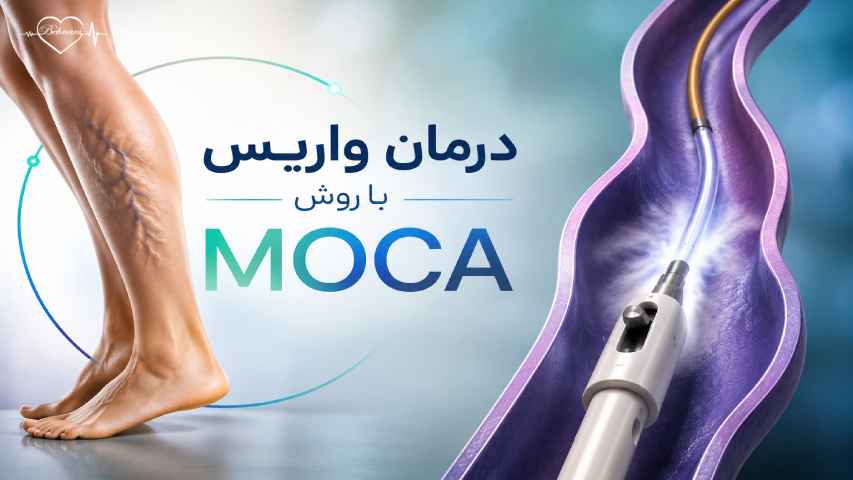
The MOCA technique is a modern treatment for varicose veins that does not require heat or general anesthesia. Learn how this mechanochemical method works and how it differs from laser treatment.
In the treatment of venous insufficiency and prominent leg veins, medical advances in recent years have focused on minimizing the need for hospitalization, general anesthesia and invasive surgical incisions.
Until recently, thermal techniques such as endovenous laser ablation (EVLA) and radiofrequency ablation (RFA) were considered the gold standards for varicose vein treatment. Although these techniques are highly effective, they use thermal energy to destroy the vein wall and therefore require the injection of a large volume of local anesthetic fluid (tumescent anesthesia) along the course of the vein to prevent burns to the surrounding tissues and nearby nerves.
Mechanochemical ablation (MOCA), which stands for Mechanochemical Ablation, was introduced into vascular treatment specifically to address this challenge. With this technique, heat is completely eliminated from the treatment process. The diseased vein is closed through a combination of mechanical disruption of the inner vein wall and the simultaneous injection of a chemical sclerosant.
What Is the MOCA Technique and How Does It Work?
The MOCA technique works through an intelligent, dual-action mechanism. In traditional non-thermal methods, only a sclerosant was injected. However, in larger and main veins, the high blood flow or large vein diameter could increase the likelihood of the vein reopening. MOCA addresses this limitation by adding a mechanical component.
Mechanical Disruption and Chemical Action
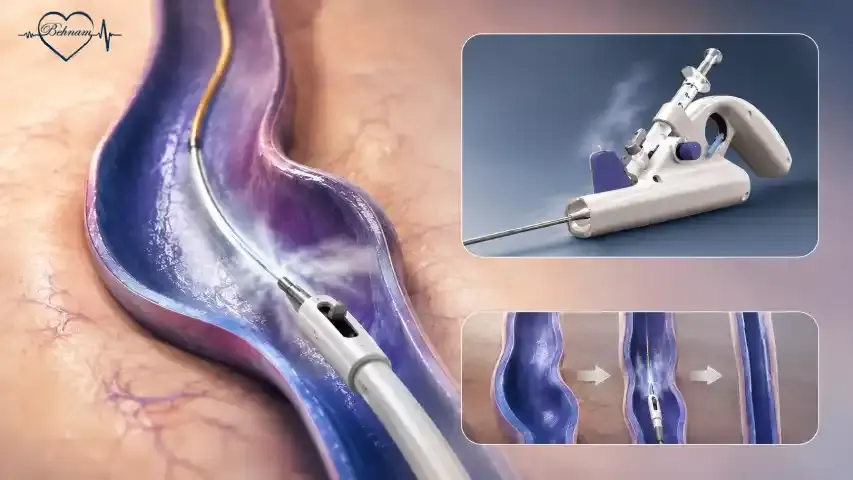
In this technique, a specialized catheter is inserted into the saphenous vein (the main incompetent vein in the leg) under precise duplex ultrasound guidance. The tip of this catheter contains a rapidly rotating wire.
When the catheter is activated, this wire mechanically contacts the inner wall of the vein or the intima, producing two important effects:
Severe spasm and contraction of the vein wall:The muscular layer of the vein responds to the physical stimulation by contracting rapidly, which reduces the vein's diameter.
Disruption of the inner lining: Microscopic abrasions created on the vein wall allow the chemical agent to be absorbed more effectively.
At the same time as this mechanical rotation, a sclerosant (usually sodium tetradecyl sulfate or polidocanol) is injected into the treated vein through the tip of the catheter.
The combination of these two factors causes controlled clot formation, destruction of the vein wall, and complete closure of the vein.
Once this diseased vein is blocked, blood flow is immediately redirected toward the healthy deep veins of the leg, relieving the pressure of venous insufficiency on the superficial veins.
Steps Involved in MOCA Varicose Vein Treatment in a Clinic
One of the major advantages of the MOCA technique for patients is the relative speed and simplicity of the procedure. This treatment does not require general anesthesia or hospital admission and is performed on an outpatient basis.
Initial duplex ultrasound and marking: Before starting, the doctor uses an ultrasound machine to identify and mark the exact course of the incompetent vein, the affected valves and the catheter entry point on the skin.
Sterilization and local anesthesia at the entry point: The skin in the treatment area (usually the upper calf or near the knee) is disinfected, and a very small amount of local anesthetic is injected only at that point so that the patient does not feel pain when the needle is inserted.
Catheter insertion and ultrasound guidance:The thin MOCA catheter is inserted into the vein through a small sheath and advanced to the highest point of venous reflux, usually the junction of the saphenous vein and the deep vein in the groin or behind the knee.
Simultaneous mechanical activation and injection: As the catheter is gradually withdrawn, the rotating wire inside it is activated while the sclerosant is injected simultaneously to close the entire length of the vein.
Completion and light dressing: The catheter is removed and a small bandage or dressing is placed over the entry site. The entire procedure usually takes less than 30 to 45 minutes.
Advantages of MOCA Compared with Thermal Techniques (Laser and RF)
Vascular specialists generally choose the MOCA technique because of its structural advantages over thermal techniques such as laser ablation for varicose veins. Eliminating heat brings important changes to the treatment process and makes the procedure more comfortable for patients.
1. Elimination of Thermal Damage and the Risk of Nerve Injury
During laser or radiofrequency (RF) treatment, the temperature inside the vein rises significantly. If the incompetent vein is close to the sensory nerves of the leg, such as the saphenous nerve, there is a risk of temporary or permanent numbness, burning sensations and nerve damage.
With MOCA, because no thermal energy is used, the risk of heat-related injury to the nerves and skin surrounding the vein is eliminated.
2. No Need for Multiple Local Anesthetic Injections
During laser and RF procedures, the doctor must use multiple injections to administer a larger volume of local anesthetic fluid around the vein. This stage is usually one of the more painful parts of thermal treatment and involves several injections that can cause stinging or burning sensations.
With MOCA, the patient only feels a simple local anesthetic injection at the catheter entry point (usually below the knee or around the ankle) and the entire length of the vein is treated without any additional injections.
3. Less Pain, Bruising and Recovery Time
Because there is no thermal injury to the tissues and no need for large volumes of anesthetic fluid, inflammation, bruising, and post-procedure pain are significantly lower with MOCA than with laser treatment.
Most patients can leave the clinic immediately after the procedure without assistance and resume light daily activities.
Is MOCA Better Than Laser and Radiofrequency Ablation?
One of the main questions patients ask is which treatment method ultimately offers the highest success rate. To answer this question, several criteria must be considered together, including the long-term vein closure rate, the level of pain and the risk of complications.
Clinical studies show that in the short term (6 months to 1 year), the vein closure rate is approximately 85–90% with MOCA and around 95–98% with laser and radiofrequency ablation. Although laser treatment still has a slight advantage in terms of durability in very large veins, MOCA scores higher in terms of procedural comfort and patient satisfaction due to the avoidance of multiple anesthetic injections.
| Comparison Criteria | MOCA | EVLA | RFA | Foam Sclerotherapy |
|---|---|---|---|---|
| Mechanism of vein closure | Mechanical + chemical | Thermal (laser) | Thermal (radiofrequency waves) | Chemical |
| Requires heat | No | Yes | Yes | No |
| Type of local anesthesia | At the catheter entry point | Tumescent anesthesia along the vein | Tumescent anesthesia along the vein | Usually no anesthesia |
| Risk of nerve injury | Very low, but not zero | Depends on the treatment site | Depends on the treatment site | Direct nerve injury is rare |
| Pain during treatment | Usually mild | Mild to moderate | Mild to moderate | Usually mild |
| Return to daily activities | Usually the same day or the next day | Usually the same day or the next day | Usually the same day or the next day | Usually the same day |
| Durability of vein closure | Lower than thermal methods in some comparative studies | Generally high | Generally high | Depends on vein diameter and type of varicose veins; generally lower than thermal methods for truncal veins |
The success rate and durability of varicose vein treatment depend on several factors, including vein diameter, severity of reflux, the type of device used, the physician's technique and the patient's anatomical characteristics.
Studies show that thermal methods, such as endovenous laser ablation and radiofrequency ablation, generally have higher long-term vein closure rates than MOCA and foam sclerotherapy when treating truncal veins. However, the best treatment method should be selected based on duplex ultrasound findings and each patient's individual condition.
Who Is MOCA Varicose Vein Treatment Suitable For?
Contrary to common belief, there is no single varicose vein treatment method that is the "best" option for every patient. Choosing MOCA requires a thorough clinical assessment and imaging evaluation by a vascular specialist.
Evaluating the characteristics of the veins helps determine whether this non-thermal technique will provide the highest level of effectiveness for the patient.
Suitable Candidates for MOCA Treatment
MOCA is generally recommended as a first-line or preferred option in the following situations:
Saphenous veins with a moderate diameter: Veins that are not excessively dilated and whose diameter falls within the standard range for the rotating catheter to function effectively.
Veins located close to nerves: Cases in which the incompetent vein runs close to sensory nerves in certain parts of the leg, particularly below the knee or near the ankle, making thermal treatments more likely to cause numbness or nerve-related pain.
Patients who are sensitive to pain and injections: Individuals who cannot tolerate the large volume of tumescent anesthetic fluid required for laser or RF procedures and are looking for a treatment with the least possible stress and discomfort during the procedure.
Contraindications and Limitations
Although MOCA offers many advantages, doctors may prefer other treatment methods in certain circumstances:
Very large, tortuous, or excessively dilated veins: The MOCA mechanical catheter is designed for relatively straight saphenous vein pathways. It may not be sufficiently effective in very large or severely twisted veins.
Presence of old blood clots or previous severe obstructions: If thrombosis or complex structural damage to the vein wall is present, other treatment methods may be given priority.
Aftercare Following MOCA Varicose Vein Treatment and Recovery Period
Although MOCA is a minimally invasive procedure, carefully following post-treatment instructions plays a direct role in maintaining the results and preventing potential complications.
Immediate walking: Immediately after the procedure, patients are asked to walk gently for 20 to 30 minutes. This activates deep venous blood flow and helps prevent blood from pooling in the legs.
Wearing compression stockings: Standard medical-grade compression stockings prescribed by the doctor are usually required for several days to a few weeks to keep the treated vein under compression as it remains closed.
Avoiding prolonged sitting or standing: During the first few days, prolonged periods of immobility should be avoided. During rest, the legs should be positioned slightly above ground level.
Returning to daily activities: Strenuous exercise and heavy lifting should be limited for one to two weeks. However, light daily activities can be resumed immediately.
Potential Side Effects and Risks of the MOCA Technique
Like any other medical procedure, MOCA may also cause mild and temporary side effects, most of which resolve on their own within a few days to a few weeks:
Bruising and dull pain: Mild bruising along the treated vein or a feeling of tightness and mild pain is normal and can be managed with common pain relievers.
Temporary vein hardening and cord-like appearance: For several weeks after vein closure, the treated vein may feel slightly firm or tender to the touch. This indicates the process of fibrosis and absorption of the vascular tissue.
Rare complications: Conditions such as deep vein thrombosis (DVT) or allergic reactions to the sclerosant are very rare. However, choosing an experienced and qualified specialist helps minimize the likelihood of these complications.
FAQ
Does the MOCA technique require anesthesia?
No. This procedure is performed entirely on an outpatient basis, using very limited local anesthesia at the catheter entry point. General anesthesia is not required.
How painful is MOCA compared with laser treatment?
Because thermal energy is eliminated and there is no need to inject large volumes of anesthetic fluid along the vein, pain during and after MOCA is lower than with laser and radiofrequency ablation.
How long do the results of MOCA varicose vein treatment last?
When performed correctly by a vascular specialist and followed by appropriate aftercare, vein closure is highly durable and permanent. However, there is a possibility of minor reopening in a small percentage of patients over the long term.
Do I need to wear compression stockings after MOCA treatment?
Yes. The doctor prescribes specialized compression stockings for a specific period after treatment to help the vein close completely and more quickly.
When might a doctor recommend MOCA instead of laser treatment?
If the target vein is located close to the sensory nerves of the leg, or if the patient does not wish to undergo multiple tumescent anesthesia injections, MOCA may be the doctor's preferred option, provided the patient's condition is suitable.
Dr. Behnam Vaghefi holds a fellowship in cardiology and vascular diseases, is a specialist in varicose vein treatment, and is a member of the American and European Heart Associations. This article has been written with the review and approval of Dr. Vaghefi, who is the author of several articles and books on cardiology and vascular diseases, and who has years of experience treating patients in his specialized clinic.
Medical Consultation