
What is an echocardiogram (echo) and what does it show?
Echocardiography is a diagnostic method also referred to as cardiac ultrasound or an echo and is considered one of the most widely used techniques for evaluating heart structure and diagnosing cardiac diseases.





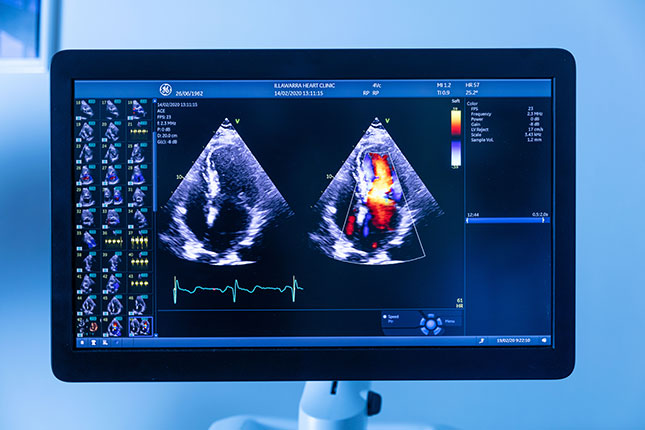
Echocardiography is a diagnostic method also referred to as cardiac ultrasound or an echo and is considered one of the most widely used techniques for evaluating heart structure and diagnosing cardiac diseases.
- Types of Echocardiography and Their Applications
- How is an Echocardiogram Performed?
- When is an Echocardiogram Necessary?
Echocardiography (often called an "echo") is a standard diagnostic method that uses sound waves to display the interior of the heart, aiding in the evaluation of cardiac diseases and disorders. It is one of the most widely used cardiac diagnostic techniques and can be employed to assess heart size and shape, evaluate heart chambers, examine heart valves, study the heart muscle and estimate pulmonary pressure. Its greatest advantage is that it is non-invasive with no risk or side effects and can even be safely performed during pregnancy.
Types of Echocardiography and Their Applications
Transthoracic Echocardiography (TTE): The most common method, completely non-invasive, performed from outside the chest wall for initial cardiac evaluation.
Transesophageal Echocardiography (TEE): In this method a camera is introduced into the esophagus via endoscopy, reaching behind the heart. It is primarily used to evaluate structures behind the heart, particularly the left-sided chambers and the mitral valve.
Stress Echocardiography: Used to assess coronary artery blockages. This will be explained in detail later.
How is an Echocardiogram Performed?
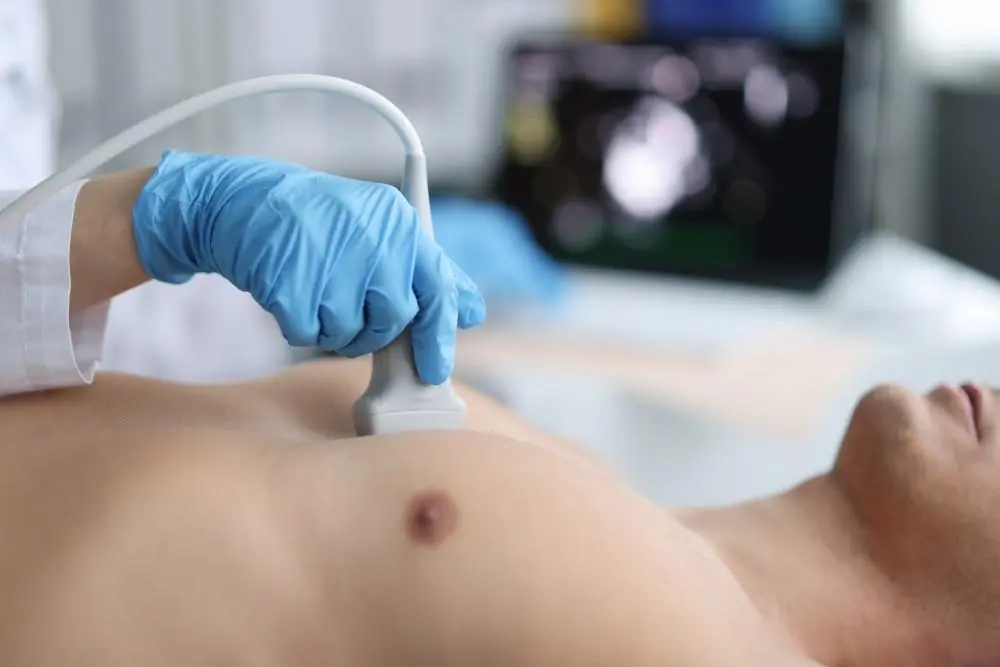
Echocardiography also called cardiac ultrasound is performed similarly to an ultrasound scan. The patient lies on a bed, a gel is applied to the chest skin to facilitate the transmission of sound waves and then a transducer is moved over the chest. Images of the heart are displayed on a monitor. No special preparation is required and it can be performed in a physician's office, clinic or hospital.
When is an Echocardiogram Necessary?
An echo is required as a primary diagnostic method for most cardiac problems:
Shortness of breath: Causes can include weak heart muscle, valvular issues (regurgitation/stenosis) or elevated pulmonary pressure, all detectable by echo.
Chest pain.
Palpitations.
Patients scheduled for chemotherapy or radiotherapy for cancer treatment.
Evaluating coronary artery blockages (via stress echo test).
Assessing congenital heart defects.
Hypertension and its complications, or investigating causes of high blood pressure (e.g., aortic coarctation).
Detecting cardiac masses: such as intracavitary thrombi or cardiac tumors.
Assessing pericardial effusion (fluid around the heart).
Stress Echocardiography
Currently stress tests are used to evaluate coronary artery stenosis. These include exercise stress tests, nuclear stress tests and stress echocardiography. Among these, stress echocardiography is the most accurate outpatient stress test globally for detecting coronary blockages with higher accuracy than exercise tests and nuclear scans.
Advantages of Stress Echocardiography:
Performed as an outpatient procedure in the clinic, eliminating the need for hospital visits.
Suitable for patients unable to perform exercise tests due to conditions like leg pain.
Easily performed on obese patients where other methods are less accurate.
Safe for patients with lung disease or asthma, for whom nuclear scans may be risky.
Safe for diabetic patients and those with kidney failure as it does not require contrast dye (which can strain kidneys in CT angiography).
Significantly lower cost compared to nuclear scans and CT angiography and typically covered by insurance.
Crucially, the test can be performed by a cardiology subspecialist (an Echocardiography Fellow).
It is the only test that does not require supplementary tests. For instance, exercise tests or nuclear scans often require a separate echocardiogram, whereas here, both the echo and stress test are completed in one session.
Overall it is a highly ideal test in terms of cost, time and accuracy.
Exercise Stress Test
This is one type of stress test used to evaluate coronary artery blockages and a patient's functional capacity. The patient runs on a treadmill while their ECG is monitored during exercise. Currently given the availability of more accurate methods for assessing coronary blockages, this test is used only in very specific cases.
When is an Exercise Stress Test Performed?
Young individuals with chest pain.
Assessing functional capacity in patients after a heart attack.
Evaluating functional capacity in candidates for surgery.

Dr. Behnam Vaghefi holds a fellowship in cardiology and vascular diseases, is a specialist in varicose vein treatment, and is a member of the American and European Heart Associations. This article has been written with the review and approval of Dr. Vaghefi, who is the author of several articles and books on cardiology and vascular diseases, and who has years of experience treating patients in his specialized clinic.
Medical Consultation