
Why don't you do these things for the treatment and control of blood pressure?!
What is blood pressure? What are the causes and methods of diagnosing blood pressure and what medications or foods should we consume? What are the home remedies for controlling and treating it? If you have these questions just read this article.





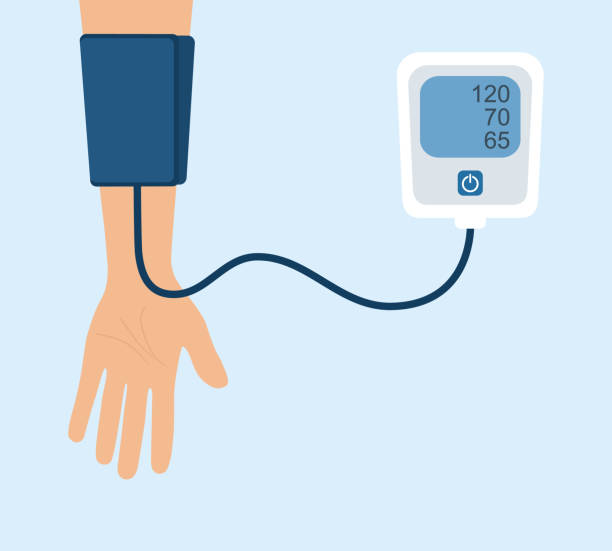
What is blood pressure? What are the causes and methods of diagnosing blood pressure and what medications or foods should we consume? What are the home remedies for controlling and treating it? If you have these questions just read this article.
- Symptoms and Signs of Hypertension
- What is Considered High Blood Pressure?
- What Are the Methods for Diagnosing Hypertension?
- How is home blood pressure measurement performed?
- What Causes Hypertension?
- Diagnostic Tests for Hypertension
- What to Eat for High Blood Pressure?
- Exercise for Hypertension
- Treating Hypertension in the Elderly
Hypertension is very common and the population affected by some degree of high blood pressure is large; in individuals over 60 years old, the probability of developing hypertension reaches about 90%.
High blood pressure causes irreversible complications and is the most important risk factor for stroke, heart attack, heart failure, kidney failure and Alzheimer's disease. This disease along with diabetes and smoking is among the leading causes of limb amputation worldwide. Every 20 mmHg increase in blood pressure doubles the risk of cardiac death.
Symptoms and Signs of Hypertension
Despite its high prevalence and irreversible complications, unfortunately high blood pressure is asymptomatic in most cases. Some common symptoms include:
Headache
Dizziness
Chest pain
Shortness of breath
Restlessness and anxiety
Flushing, etc.
Learn more: What are the symptoms of cardiac discomfort?
What is Considered High Blood Pressure?
A blood pressure reading consists of two numbers:
Systolic pressure or maximum pressure
Diastolic pressure or minimum pressure
Example: A blood pressure of 130 over 85 means systolic is 130 and diastolic is 85.
Ideally blood pressure should be around 120 over 80 or 12 over 8. For individuals checking their blood pressure at home, if the reading falls within the systolic range of 120-135 and diastolic range of 80-85, it is considered pre-hypertension.
For those without specific conditions like diabetes, heart problems, etc., it is recommended at this stage to engage in regular exercise + dietary modifications + avoid triggers for high blood pressure and be re-evaluated after 3 months. If blood pressure is above the systolic range of 135 and diastolic range of 85, starting antihypertensive medication is recommended, especially if there is a family history of hypertension.
Does High Blood Pressure Require Treatment?
If you are diagnosed with high blood pressure for the first time:
If the blood pressure is within the pre-hypertension range, starting medication is not immediately necessary. It is recommended to follow a proper diet and regular exercise for 3 months.
If blood pressure is above the mentioned range, two approaches can be taken:
24 to 48-hour Ambulatory Blood Pressure Monitoring (ABPM) which will be explained later in the article.
Home blood pressure log/chart. If the average blood pressure is high using either method then medication will be initiated.
If blood pressure is high, one should not delay; antihypertensive medication must be started immediately and necessary investigations should be performed.
If evidence supporting elevated blood pressure is seen on ECG or echocardiogram, antihypertensive medication should be started as soon as possible.
What Are the Methods for Diagnosing Hypertension?
Generally there are three methods for diagnosing hypertension, confirming high blood pressure and assessing the need for treatment:
1. 24-Hour Ambulatory Blood Pressure Monitoring (ABPM)
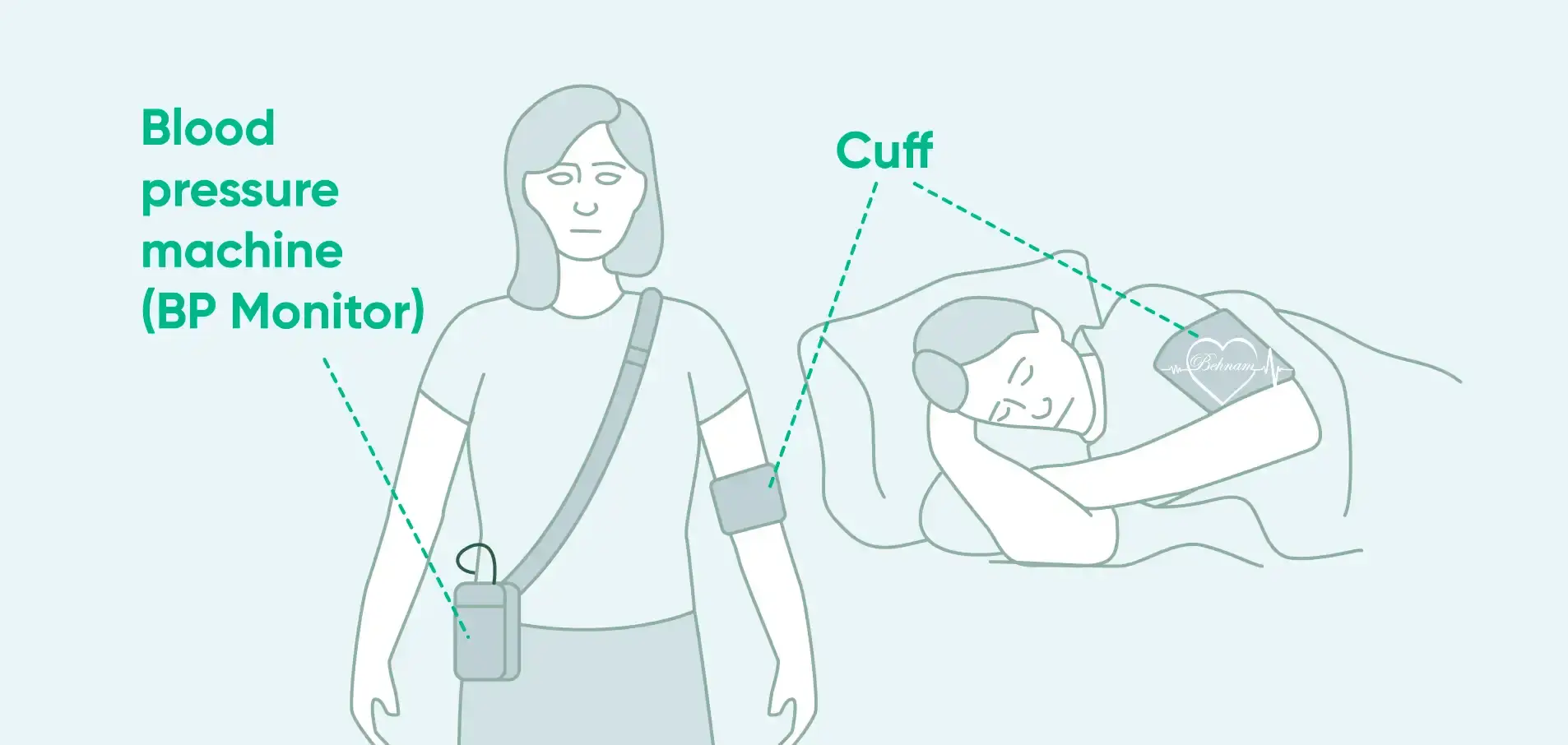
Ambulatory blood pressure monitoring is essentially a portable blood pressure device connected to you for 24 to 48 hours. During this time, you go about your usual activities at home and work. The device automatically measures your blood pressure at set intervals. After removing the device and analyzing the data by computer, the average blood pressure during the day, night and over 24 hours is determined.
Advantages of Ambulatory Blood Pressure Monitoring
The frequency of measurements is high (e.g., 50 times in 24 hours) and after computer analysis, it reports the average of all recorded readings.
The patient is engaged in their usual daily activities at home and work and is not focused on the blood pressure check. They do not have the stress of having their blood pressure measured. Therefore the readings obtained by this method are closer to reality.
Ambulatory monitoring is the only method that can check blood pressure during the night while sleeping. Normally blood pressure should drop by about 20 mmHg during sleep at night. Individuals whose blood pressure does not drop during sleep are termed non-dippers; this group has a higher risk of cardiovascular events and hypertension complications.
Based on the obtained information, the physician decides:Whether starting antihypertensive treatment is necessary.
Whether a change in the dosage of antihypertensive medication is needed.
It is recommended that ambulatory blood pressure monitoring be used initially to confirm the diagnosis and then repeated every 6 to 12 months to assess treatment effectiveness.
2. Home Blood Pressure Measurement
Using a suitable digital blood pressure monitor, blood pressure can also be recorded at home. The advantage of this method is the absence of the stress of the clinical environment (clinic, hospital) and the patient measures their blood pressure more calmly.
There is a term called white-coat hypertension: meaning when a patient is in a clinic or hospital environment or even just seeing the white coats of doctors or medical staff, they become stressed and experience a false increase in blood pressure. This highlights the significant importance of checking blood pressure at home in a stress-free environment.
3. Office/Clinic Blood Pressure Measurement
Due to the stress of clinical environments, the importance of office blood pressure measurement is less compared to the other two methods.
What Specifications Should a Blood Pressure Monitor Have?
It is recommended to use a digital blood pressure monitor (not aneroid or mercury) with an upper arm cuff (not wrist) for checking blood pressure at home.
How is home blood pressure measurement performed?
The environment should be quiet and calm.
Avoid smoking, tea and coffee 30 minutes before measurement.
Rest for 5 minutes before measurement.
Be seated [do not lie down] with your back supported by a chair and feet flat on the floor (do not cross your legs).
If you need to use the restroom, do so before measuring your blood pressure.
Measure your blood pressure twice a day:
In the morning before taking antihypertensive medication.
In the evening before dinner.
In each session, measure your blood pressure twice with a 1-minute interval, both times on the same arm.
Always choose one arm for checking blood pressure (e.g., always check your blood pressure on the right arm). There may be a slight difference in blood pressure between the left and right arms which is not clinically significant.
Orthostatic or Postural Hypotension
This refers to a condition where the patient experiences symptoms of low blood pressure such as dizziness and blurred vision after rising from a lying or seated position. This condition is more common in the elderly, diabetics and patients with Parkinson's disease. Its importance lies in the fact that if the person cannot maintain balance, they may fall which can cause injury. This is particularly significant for elderly individuals living alone who often have balance issues.
How to Diagnose Orthostatic Hypotension
Method One: First, have the patient lie down for 5 minutes, then immediately stand up and check their blood pressure within a maximum of 3 minutes of standing.
Method Two: First, have the patient sit on a chair for 5 minutes, then immediately stand up and check their blood pressure within 1 minute of standing.
A drop in systolic blood pressure of 15–20 mmHg or a drop in diastolic blood pressure of 7–10 mmHg confirms the diagnosis (orthostatic hypotension).
What Causes Hypertension?
Keep in mind that in 85-90% of cases, hypertension has no specific cause; this is called primary (essential) hypertension and is in other words, genetic/familial. However in 10-15% of cases, a specific cause can be found through investigations, and treating that cause can resolve the hypertension. Therefore the goals of necessary hypertension investigations are twofold:
To find a secondary cause for hypertension.
To determine whether the patient has developed complications of hypertension such as damage to the heart, blood vessels, brain, kidneys and eyes.
These initial investigations include:
Medical History and Physical Examination: Particularly regarding daily activity levels, diet, medications used, comorbid conditions (such as heart disease, kidney disease, diabetes, etc.) and chronic conditions (such as joint pain, etc.).
Medications that can raise blood pressure: Contraceptives and hormonal agents, corticosteroids, non-steroidal anti-inflammatory drugs (NSAIDs), antidepressants, etc.
Diagnostic Tests for Hypertension
ECGand Echocardiogram.
Initial and complete blood tests: Including liver, thyroid and kidney function tests, blood sugar, lipid profile and uric acid levels.
More specialized tests such as blood catecholamines, aldosterone and renin levels, cortisol levels and some pituitary hormones.
Color Doppler ultrasound of the renal arteries and a complete abdominal and pelvic ultrasound.
If necessary, CT scan of the abdomen and chest may also be used.
After confirming high blood pressure, does the patient need to check their blood pressure continuously?
The answer is definitely yes, because:
After confirming hypertension and starting treatment, the patient must also evaluate the effectiveness of their medication so that drug dosages and instructions can be adjusted if necessary.
Blood pressure may change during different periods of life. For example with age, some patients may experience higher blood pressure due to increased arterial stiffness while others may conversely experience fluctuations with low blood pressure. For instance changes in blood pressure may occur during menopause. Therefore blood pressure should be continuously and consistently evaluated so that the physician can make necessary adjustments to your treatment if needed.
How often is treatment follow-up recommended?
It is recommended to return for a follow-up visit one month after starting treatment to check the drug's effect and side effects. Subsequently you will be monitored every 3-6 months.
How long should antihypertensive medication be taken?
If no specific cause for high blood pressure is found in the initial investigations and you are diagnosed with primary (essential) hypertension, you typically need to take the medications for a long period (several years) and never stop the medications arbitrarily without consulting your doctor!
What is Treatment-Resistant Hypertension and how is it treated?
If despite taking at least three standard antihypertensive medications, systolic blood pressure remains above 160 mmHg or diastolic above 90 mmHg, it is considered resistant hypertension. The steps for evaluating these patients include the following:
Confirming hypertension using 24-hour ambulatory blood pressure monitoring (ABPM).
Reviewing patient medication adherence:
Is the patient's medication regimen appropriate?
Is the drug dosage sufficient?
Does the patient take their medications on time without forgetting (especially in the elderly and those with Alzheimer's or memory issues)?
Assessing dietary compliance: Avoiding oils, salt and excess carbohydrates.
Checking for chronic pain: e.g., long-term back or knee pain that can elevate blood pressure.
Evaluating for chronic anxiety and stress.
Reviewing comorbid conditions: e.g., diabetes, dyslipidemia, smoking, alcohol use.
Assessing for overweight/obesity.
Lifestyle Modification
It can be confidently stated that lifestyle modification is the cornerstone and one of the most effective measures in preventing and treating high blood pressure. The main pillars of a healthy lifestyle include:
Proper Nutrition
Exercise
Weight Loss
What to Eat for High Blood Pressure?
Which foods exacerbate high blood pressure? Red meat, fats and oils, any sugar-containing products and sweets, carbonated beverages and sodas, alcohol. Salt intake should be less than 5 grams per day.
Which foods are effective in better controlling high blood pressure? Fresh fruits and vegetables, high-fiber foods, fish, nuts (especially walnuts, hazelnuts and almonds but be mindful of their high calorie content). Foods and supplements containing calcium, magnesium and potassium, olive oil, low-fat dairy and whole grains.
Beneficial supplements for high blood pressure:
Daily intake of 100 mg CoQ10 helps better control blood pressure.
Daily intake of approximately 3 grams of Omega-3 helps better control blood pressure.
Magnesium
Daily intake of approximately 600 mg of garlic helps better control blood pressure.
Vitamin C and Vitamin E
Psyllium husk is high in fiber; a daily intake of about 10 grams helps better control blood pressure.
Consuming pomegranate, grapefruit, and ginseng is also effective in treating high blood pressure.
Dark chocolate and tea are effective in controlling high blood pressure.
Exercise for Hypertension
Aerobic exercise is recommended: 5 to 7 days per week, at least 45 minutes of aerobic exercise daily.
Dynamic resistance training is recommended: Perform at least two days per week. In each session, select 6 exercises and perform them in 3 sets of 10 repetitions.
Isometric resistance training is recommended: Perform at least two days per week.
Weight Loss
Even a weight loss of 1 kilogram is effective in lowering blood pressure.
Treating Hypertension in the Elderly
It is a misconception that because of advanced age, intensive treatment is not needed. On the contrary, in the elderly, because blood vessels are more sensitive, blood pressure must be controlled more precisely.
Drug serum concentration is higher in the elderly, so be cautious of medication side effects and drug interactions.
Due to a more active parasympathetic system in the elderly, there is a risk of severe drops in blood pressure and heart rate.
Simple drug regimens should be used and the number of daily doses should be minimized whenever possible.
Because of the possibility of forgetfulness and Alzheimer's, ensure the patient is actually taking their medications.
Medicine container lids should be easy to open and not too tight.
Ensure the patient understands how to take the medication correctly.
Some medications can exacerbate tremors, depression, gastric reflux and osteoporosis in the elderly; avoid prescribing medications arbitrarily.
The use of certain painkillers in the elderly due to joint and muscle pain can worsen hypertension.

Dr. Behnam Vaghefi holds a fellowship in cardiology and vascular diseases, is a specialist in varicose vein treatment, and is a member of the American and European Heart Associations. This article has been written with the review and approval of Dr. Vaghefi, who is the author of several articles and books on cardiology and vascular diseases, and who has years of experience treating patients in his specialized clinic.
Medical Consultation