
Leg Varicose Veins During Pregnancy: Causes, Risks & Treatment
Leg varicose veins during pregnancy are one of the concerns that worry many women. According to statistics between 10% and 40% of women experience varicose veins during this period.





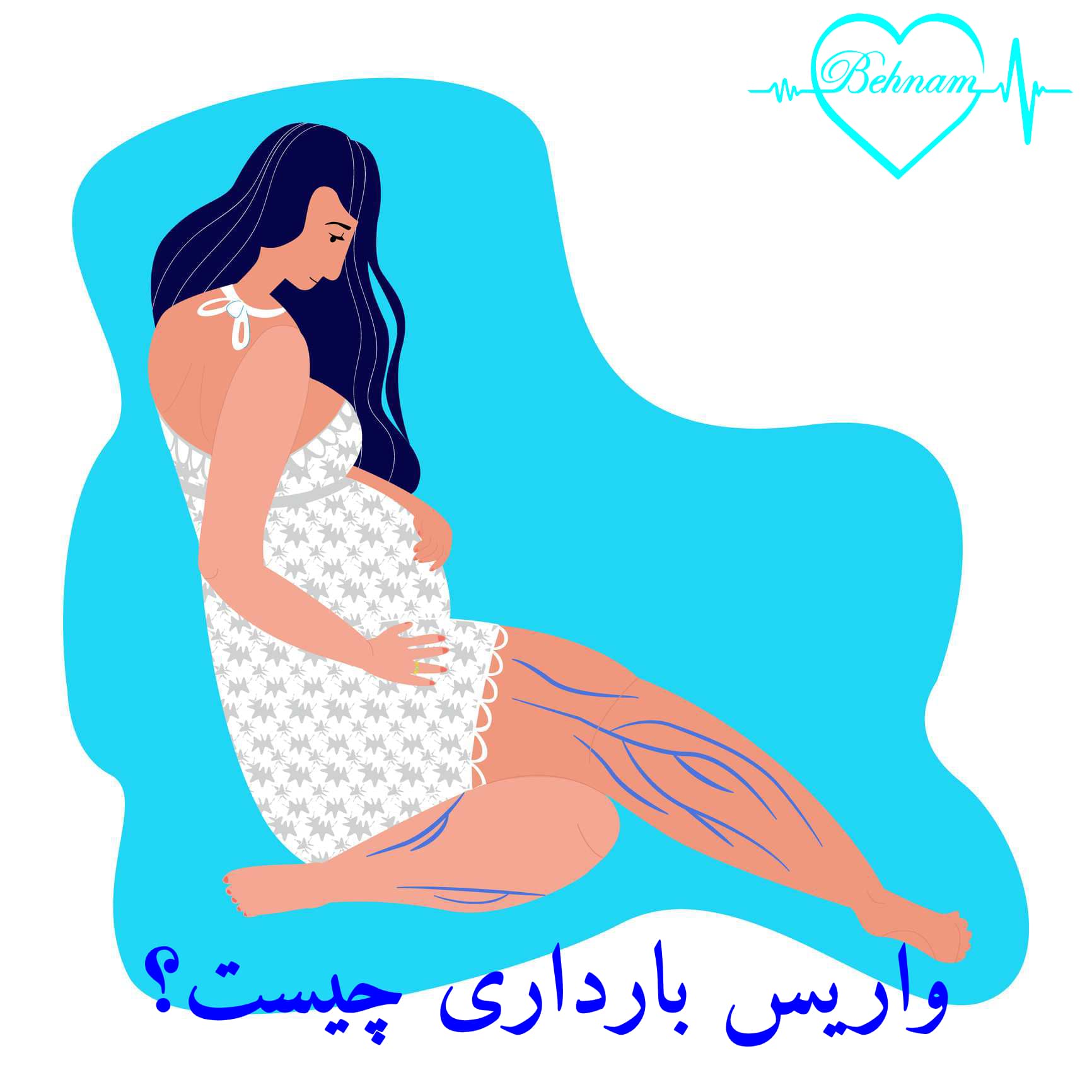
Leg varicose veins during pregnancy are one of the concerns that worry many women. According to statistics between 10% and 40% of women experience varicose veins during this period.
- Causes of Leg Varicose Veins in Pregnancy
- Symptoms of Leg Varicose Veins in Pregnancy
- Treatment and Management of Varicose Veins During Pregnancy
- Risks of Varicose Veins During Pregnancy
One of the problems that 10–40% of women may face during pregnancy is varicose veins. This condition usually appears as purple or blue, twisted and swollen veins in the legs. For many women this not only causes potential risks during pregnancy but also creates great concern and they often look for ways to prevent or deal with it.
Research shows that the risk of developing varicose veins is 82% higher in women with a history of pregnancy compared to women who have never been pregnant.
Causes of Leg Varicose Veins in Pregnancy
The most important factors that cause varicose veins during pregnancy:
- Uterine pressure
During this period the uterus grows larger and heavier due to fetal growth, putting more pressure on the pelvic blood vessels. This reduces blood flow and causes blood to pool in the legs.
- Hormonal changes
Hormonal fluctuations during pregnancy increase the risk. Progesterone one of the hormones that rises significantly, relaxes vein walls and makes them more prone to varicose veins.
- Genetics and family history
One of the strongest risk factors is family history. If close relatives (especially mother or sisters) have had varicose veins, your risk is much higher.
- Increased blood volume
To nourish the baby a pregnant woman produces much more blood. This increased volume puts extra pressure on the veins causing them to dilate and twist.
- Weight gain
Most women gain weight due to the baby, increased food intake and reduced activity. This extra weight puts more pressure on leg veins.
- Multiple pregnancies
Each additional pregnancy further weakens vein walls significantly increasing the risk.
- Unhealthy diet
Excessive salt, low fruit/vegetable intake and insufficient water worsen varicose veins.
- Prolonged standing
Standing for long periods longer than 20–30 minutes makes it harder for blood to fight gravity and return to the heart, increasing clot and varicose risk.
- Advanced maternal age
Veins and valves naturally weaken with age; pregnancy accelerates this process.
Symptoms of Leg Varicose Veins in Pregnancy
Take these signs seriously as warning signs:
Swelling and pain in the legs (do not confuse with normal pregnancy swelling)
Feeling of heaviness and fatigue in the legs
Visible purple/blue, twisted and swollen veins
Of course you should not mistake this sign or symptom for stretch marks (striae) which are also common during pregnancy!
Itching around varicose veins
Leg cramps especially in the calves
Skin discoloration and dryness
In severe cases: ulcers or bleeding
Treatment and Management of Varicose Veins During Pregnancy
Varicose veins usually improve significantly after delivery but the following measures will help prevent and relieve symptoms safely:
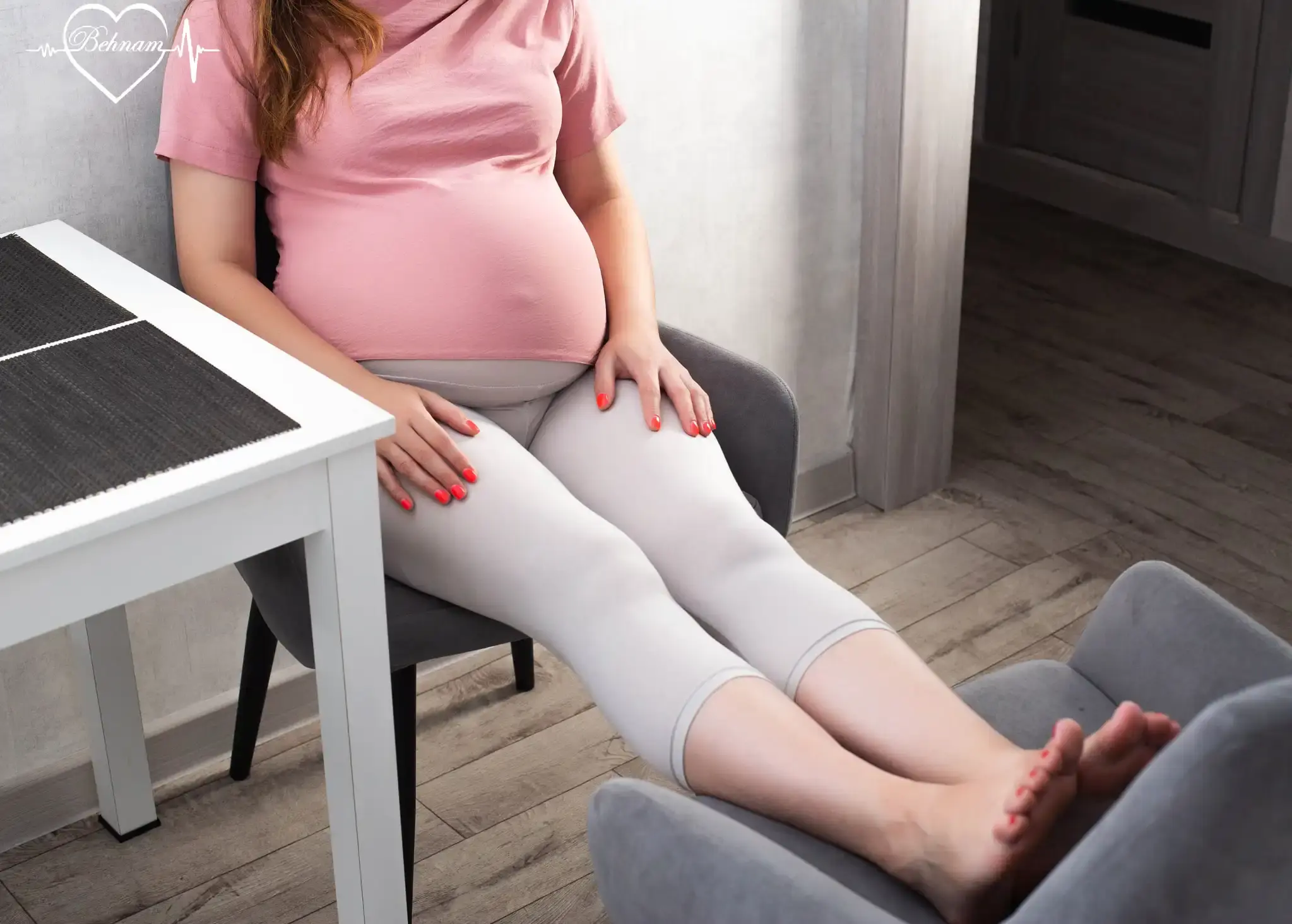
Wear compression stockings
They improve circulation, reduce fatigue and swelling and prevent blood clots.
Guidelines for using compression stockings in pregnancy:
Always consult your doctor first (especially if you have heart or vascular disease)
Mild varicose: 15–20 mmHg | Moderate: 20–30 mmHg | Higher pressure only with doctor’s prescription
Choose the correct size
Put them on in the morning before getting out of bed
Elevate your legs
Several times a day, raise your legs above heart level for 10–15 minutes (use a wall or chair). At night, slightly elevate the foot of the bed.
Light exercise
Walking, pregnancy yoga and swimming are excellent and safe.
Avoid prolonged standing
Take a 10-minute sitting break every 20–30 minutes of standing. Move your ankles frequently.
Wear proper shoes
Comfortable, low-heeled shoes with good arch support help a lot.
See the article Best Shoes for Varicose Veins for detailed recommendations.
Healthy nutrition for varicose veins
Eat plenty of:
Vitamin C: oranges, bell peppers, kiwi
Antioxidants: berries, spinach, walnuts
Vitamin K: broccoli, lettuce
Adequate water intake, reduced salt consumption, the use of healthy fats such as oily fish or seeds and consuming iron-rich foods together form a suitable diet during pregnancy to help prevent varicose veins.
Risks of Varicose Veins During Pregnancy
Although very common and usually harmless, in rare cases it can cause serious complications:
In rare cases varicose veins may increase the risk of developing a blood clot in the deep veins of the leg, presenting as severe leg pain, one-sided swelling and skin discoloration. This condition is dangerous and requires immediate and urgent treatment.
The blood clot from DVT may travel to the lungs and cause a pulmonary embolism (PE). This condition requires immediate medical evaluation and urgent treatment.
Bleeding from superficial varicose veins
Chronic ulcers and infection
Persistent varicose veins after delivery (especially after multiple pregnancies)
Conclusion
Varicose veins in pregnancy are extremely common but in most cases do not endanger mother or baby. With simple preventive measures (compression stockings, movement, leg elevation, healthy diet) you can pass this period comfortably. However if you have risk factors (family history, multiple pregnancies, obesity, prolonged standing), stay extra vigilant and consult a specialist immediately in case of severe symptoms.
FAQ
1- Are varicose veins during pregnancy dangerous?
Usually not. They mainly cause discomfort, pain, heaviness and swelling. But if you notice skin ulcers, severe color change or bleeding, see a specialist immediately.
2- What increases the risk of varicose veins in pregnancy?
Genetics, obesity, twins, poor diet, prolonged sitting/standing, advanced age.
3- Can varicose veins be treated during pregnancy?
In most cases, treatment is postponed until after delivery because symptoms often disappear on their own. If symptoms persist months after birth, modern treatments (sclerotherapy, laser) can be safely performed.
4- Do varicose veins go away after childbirth?
In most women, they significantly improve or disappear within months after delivery. Persistent veins can be treated safely postpartum.
5- Is it safe to use medication for varicose veins during pregnancy?
Many medications can harm the baby. Any medication must be prescribed and approved by your doctor.
Dr. Behnam Vaghefi holds a fellowship in cardiology and vascular diseases, is a specialist in varicose vein treatment, and is a member of the American and European Heart Associations. This article has been written with the review and approval of Dr. Vaghefi, who is the author of several articles and books on cardiology and vascular diseases, and who has years of experience treating patients in his specialized clinic.
Medical Consultation