What is varicose disease and what are its symptoms? Causes and treatment
Varicose veins occur when the veins become swollen and enlarged. You may ask how this happens and what factors can cause it. The answer to this question can be explained in simple terms.




Varicose veins occur when the veins become swollen and enlarged. You may ask how this happens and what factors can cause it. The answer to this question can be explained in simple terms.
- Types of varicose veins based on severity
- This disease can also be classified based on severity:
- Types of varicose veins based on location of occurrence
- Types of varicose veins based on saphenous vein
- What causes varicose veins and what is its cause?
- What are the signs and symptoms of varicose veins?
- What happens if varicose veins are not treated?
Most of us upon hearing the word varicose veins imagine swollen and protruding veins in our minds. Varicose veins actually refer to a series of protruding vessels and veins in the leg, although all parts of the body including head and neck, arms and torso may also develop varicose veins but it is more common in the legs.
When veins become swollen and dilated, varicose veins are created. You may ask how this happens? The answer to this question can be given in simple language as follows.
Throughout our body there are veins whose role is to carry blood from the body's limbs to the heart. In these veins there are valves called nest-like valves that when blood moves towards the heart, they prevent blood from returning. If for reasons such as excessive pressure on a part or organ of the body these valves or vein walls become weak then blood flow will face problems.
Accumulation of blood in veins or blood clot causes swelling and enlargement and excessive pressure on veins and creation of varicose veins disease. In fact varicose veins are a type of defect and problem in pumping blood in veins.
Learn more: What are leg varicose veins?
One of the reputable medical journals states the statistics of varicose veins as 2 to 73 percent worldwide. It may be interesting for you that geographical conditions have caused this diversity in statistics and the prevalence of this disease has been higher in developed and western countries. In recent years this disease has received more attention and various treatments have been considered for it.
In fact in addition to important factors such as pregnancy, obesity, diabetes, gender, hormonal disorders, injury and damage to the calves, aging, occupational conditions, genetics, certain sports fields, blood pressure and lifestyle, geographical and climatic factors can also be considered in the creation and progression of this disease. In the following we will mention the most important factors that cause varicose veins.
Factors of varicose veins
Among the most important factors that cause varicose veins the following can be mentioned:
Family history or genetics
If one of the family members or close relatives has varicose veins or diseases such as high blood pressure, cardiovascular diseases or even metabolic diseases the chance of developing this disease will be higher.
Read more: Does diabetes cause varicose veins?
Gender
Numerous studies and research have shown that varicose veins in women are more common than in men. Of course the reason for this is not very clear yet. But hormonal changes and pregnancy are factors that can play an important role in this regard.
Age
Age is known as a main and key reason for this disease. Because as age increases the calf muscles and blood vessel valves in the leg become weaker. This disease is seen in 70-year-old people approximately 80 percent which is certainly a high statistic!
Of course, sometimes varicose veins in children and adolescents can occur for various reasons and we should not assume that varicose veins are a disease that only affects the elderly!
Pregnancy and childbirth
Due to the hormonal and physiological changes that occur during pregnancy more pressure is put on the leg vessels and therefore the possibility of developing this disease will be higher. The more pregnancies and childbirths there are the more you will definitely be at risk of this disease.
Occupation
Some harmful occupations for varicose veins that require standing or sitting for long periods such as teachers, nurses, guards, hairdressers, workers and ... the probability of swelling and protrusion of leg vessels in them will be higher.
Obesity and overweight
Obesity and overweight cause pressure on leg veins and result in weakening their function and returning blood to the calf. This factor is especially a greater risk factor for this disease in women than in men. Of course it should be mentioned that the criterion of obesity or overweight is the same body mass index or BMI which approximately determines the amount of body mass and fat.
In the past this disease was not taken very seriously but today with the increase of patients and also the advancement of medical science and treatment, various types of varicose veins have been recognized and various treatments have been suggested and considered for this disease.
Of course, you might find it interesting to know that not only obesity, but also sudden weight loss and procedures like gastric sleeve surgery can have complications such as leg varicose veins.
Classification of types of varicose veins
This disease can have different types according to the size of swelling and size of leg veins, severity, range of involvement and location of occurrence. Protruding vessels may appear in red, blue, purple, green and sometimes dark purple colors.
Types of varicose veins in terms of size
In terms of size they may be very fine and superficial which are technically called telangiectasia vessels or spider varicose veins and they may become larger and more prominent which are called prominent varicose veins. Very prominent and severe cases are also technically called trunk varicose veins.
Spider varicose veins
Spider varicose veins are a milder and smaller type of varicose veins that in terms of appearance are similar to spider webs and the reason for their naming is also for this reason. In fact it is better to say that spider veins are the same small blood capillaries that connect to larger blood veins and are involved in the blood circulation system.
Due to their proximity to the surface of the skin they are easily visible and often in blue, purple or red colors and often in the legs or face. Spider veins in many cases are not very dangerous and painful and may be more annoying in terms of appearance and beauty. But it should be noted that sometimes the presence of this type of vein can be a sign of chronic varicose veins or insufficiency and disorder in the blood supply system of veins. For this reason examination by a doctor seems necessary and essential.
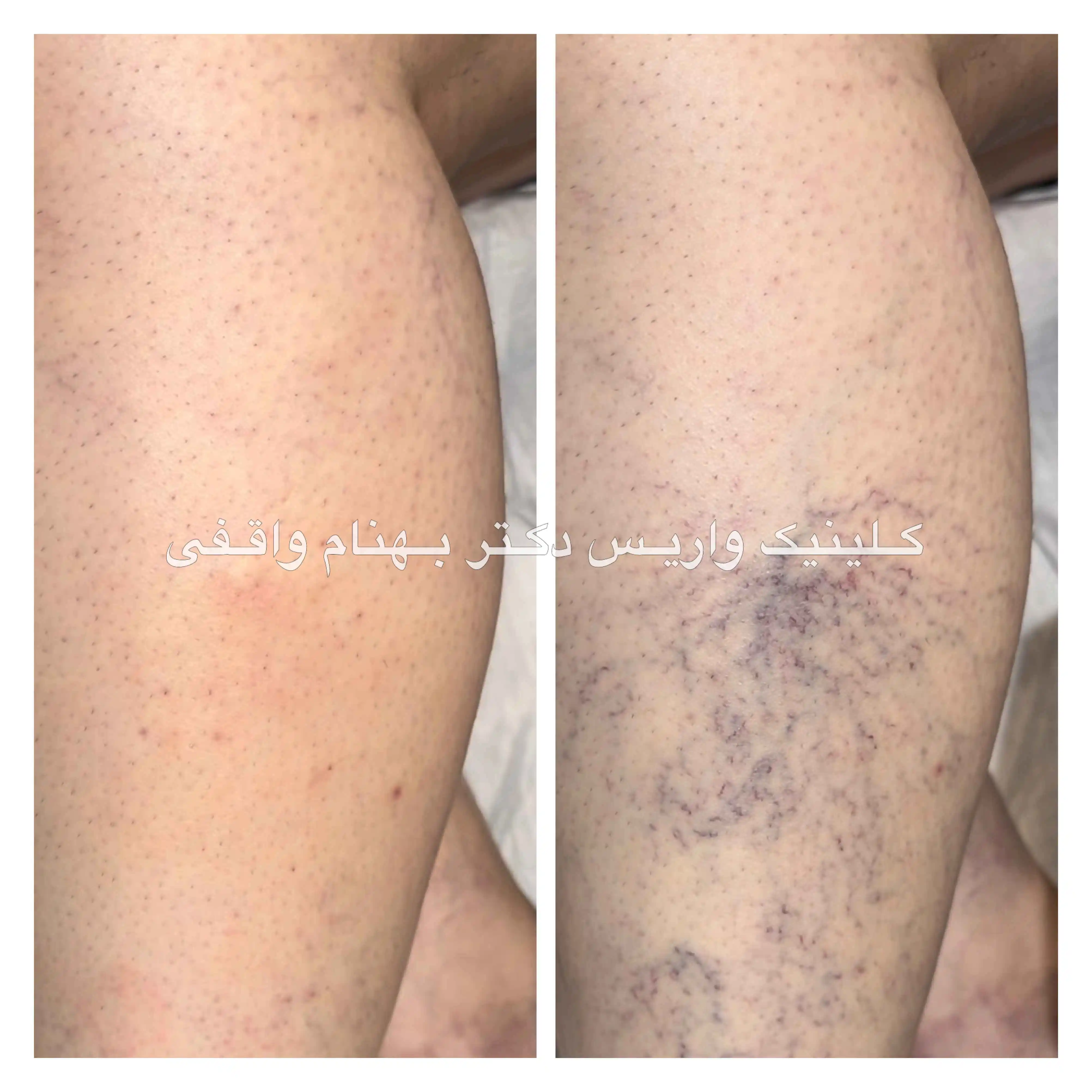
Picture of spider varicose veins in a patient who was treated by Dr. Behnam Vaghfi.
Reticular or mesh varicose veins
Reticular varicose veins are delicate and small bluish-purple veins that are connected to each other like a network. This type of varicose veins often do not cause problems and may be annoying for the patient in terms of appearance. Their size is larger than spider varicose veins and they are located in a deeper level in the skin.
Trunk varicose veins
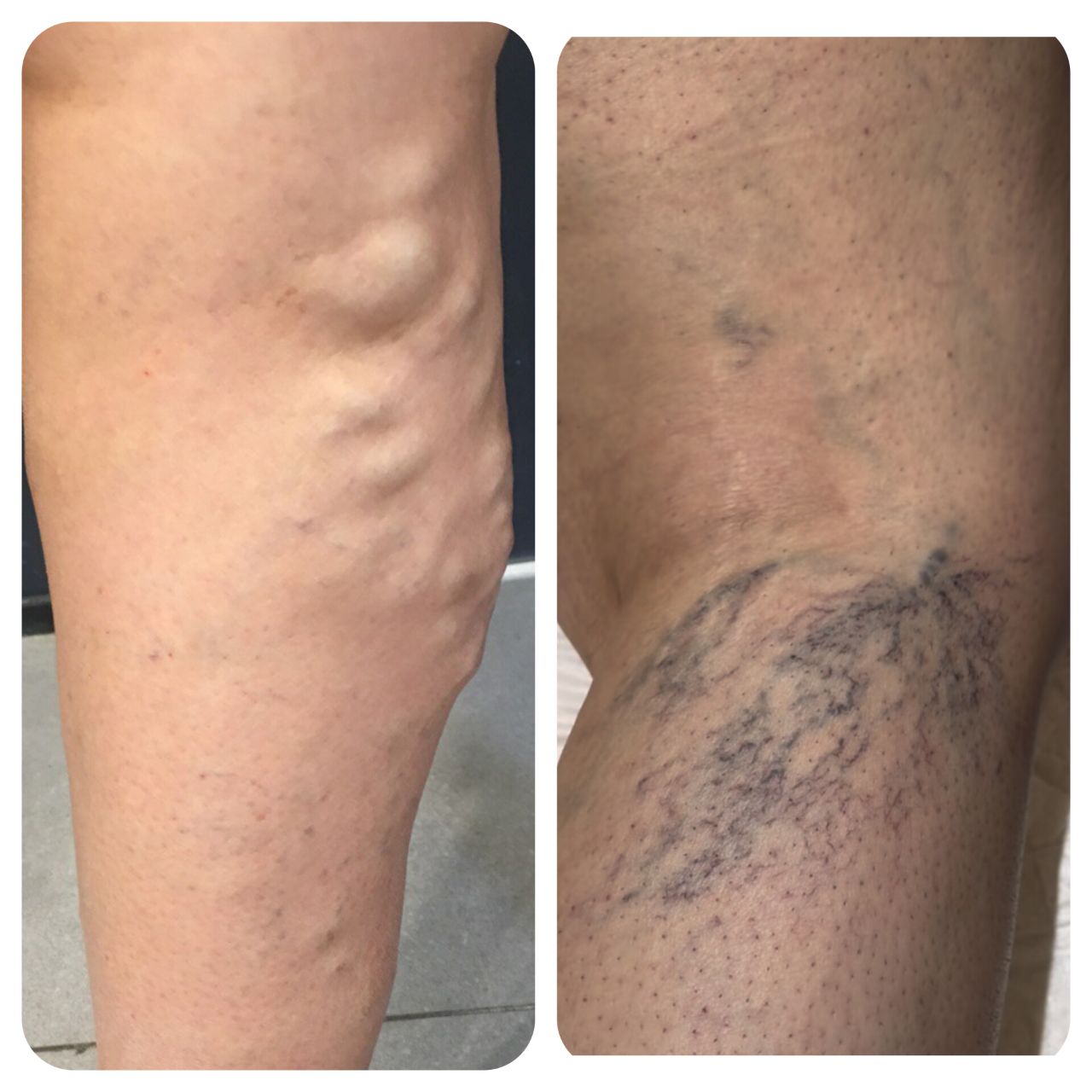
Trunk varicose veins are large and twisted veins whose shape and size change is such that they cause protrusion and bulging and are easily visible under the outer layer of skin. This type of vein swelling may be painful and annoying. If you suffer from such a disorder and abnormality be sure to take action for treatment under the supervision of a specialist doctor.
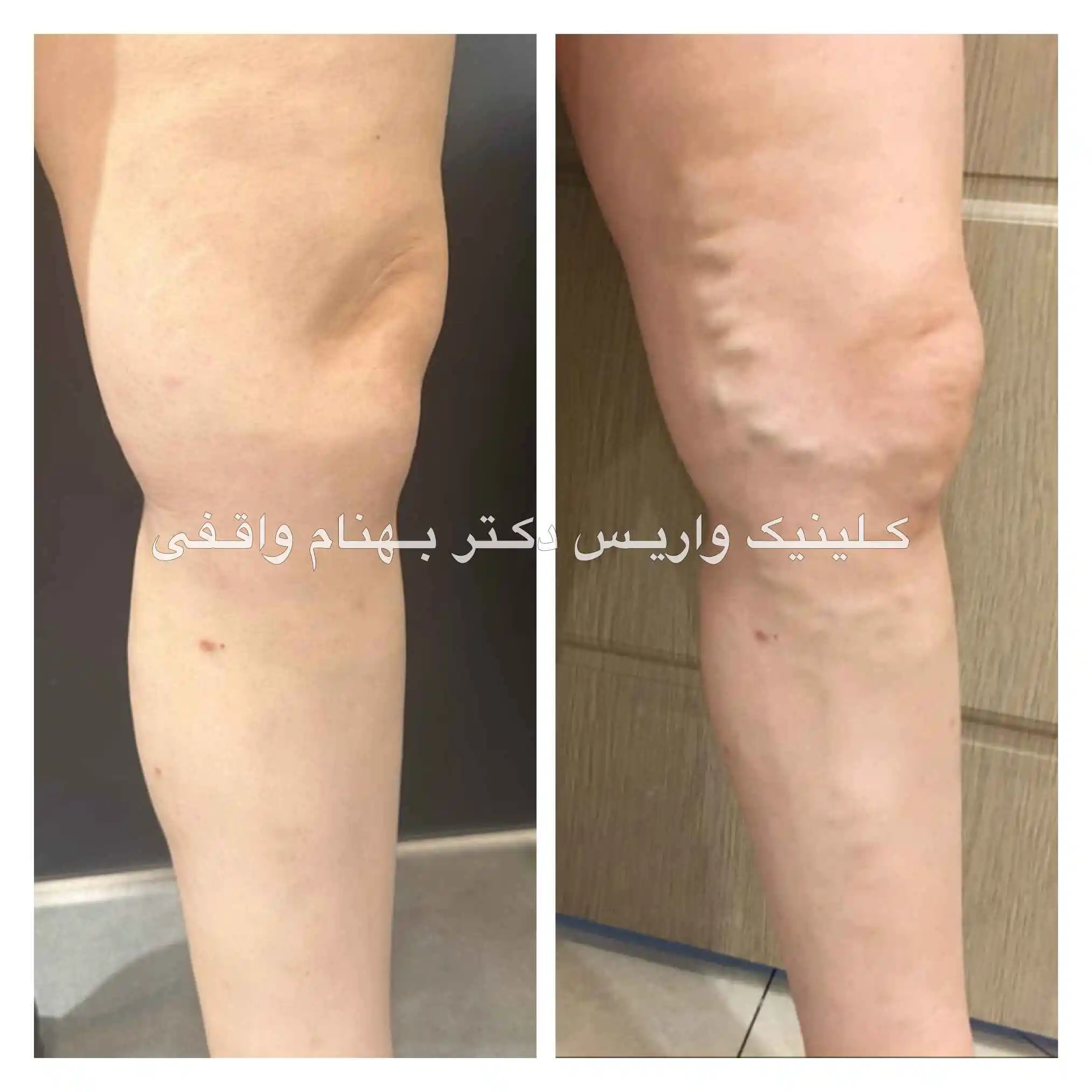
Picture of the appearance of trunk varicose veins that was treated in Dr. Behnam Vaghfi's super specialized varicose vein clinic.
Types of varicose veins based on severity
This disease can also be classified based on severity:
Mild varicose veins
In the mild type varicose veins are small and symptoms are mild such as feeling tired or heavy in the leg.
Moderate varicose veins
At this stage, vessels and veins are large, swollen and twisted and create feelings of pain, discomfort, swelling and skin changes for the patient.
Severe varicose veins
In the severe type veins have become very twisted and large and in addition to pain and discomfort, they may also bring complications such as ulcers and bleeding.
Types of varicose veins based on location of occurrence
This disease may occur in different parts of the body. The most important and common types are:
Leg varicose veins
The most common type of varicose veins and generally occurs in the back of the calf and thigh area.
Hand varicose veins
Swelling and protrusion of veins may occur in any part of the hand. Most of the time, this type of varicose veins does not cause serious pain and discomfort.
Facial varicose veins
They usually appear as red or purple veins around the nose and cheeks.
Esophageal varicose veins
This type is more common in people with liver cirrhosis, stomach problems and high blood pressure and can cause bleeding.
Testicular varicose veins or varicocele
In this case the veins and vessels inside the testicles become large and swollen. This type of varicose veins can affect sperm quality and fertility.
Anal varicose veins or hemorrhoids
Swelling of anal veins causes pain, burning and bleeding. Hemorrhoids can be caused by constipation, pregnancy, prolonged sitting or overweight.
Types of varicose veins based on saphenous vein
Two main veins that can play a fundamental role in creating varicose veins are the great saphenous vein and the small saphenous vein.
Small saphenous vein
This vein that runs from behind the ankle to behind the knee drains blood from the outer part of the calf.
Great saphenous vein
The longest superficial vein in the body that extends from the ankle to the groin. This vein drains oxygen-free blood from the superficial parts of the calf and knee.
Learn more:Are varicose veins related to the heart?
What causes varicose veins and what is its cause?
Apart from the important factors that we mentioned earlier in general the reasons that can be considered for varicose veins are:
Aging
As age increases vein walls and valves become weaker and therefore the probability of developing this disease increases.
Hormonal changes in women that occur in several periods.
Early menopause changes
Taking hormonal drugs (birth control pills - hormonal drugs in menopause)
Hormonal changes during menstruation
Pregnancy and childbirth
In pregnancy there are 3 reasons that make women very prone to varicose veins:
Hormonal changes
Pressure of the uterus on leg vessels
Increase in intravascular volume
Learn more about varicose veins in pregnancy.
Occupations with little movement
Genetics
Wearing tight clothes
Wearing tight clothes such as tight pants, tight blouses and ... can have an adverse effect.
Wearing inappropriate shoes or high heels
Wearing this type of shoes causes laziness in the calf muscle and as a result, blood return may not be done well.
Prolonged immobility
for example people who rest in bed for a long time due to old age and incurable disease or who do not walk well for a long time due to leg splint or long leg cast.
Wrong sitting habit and style
for example throwing legs over each other in a way that the leg is under pressure; over time this habit will have an adverse effect on leg veins.
The relationship between obesity and varicose veins
Obesity and overweight especially in body mass index above 30
Causes that increase intra-abdominal and intravascular pressure and damage to vein walls such as constipation, chronic cough and high blood pressure
If you want to know why constipation is a threat for developing varicose veins, click here.
Gender
As we mentioned, women are more likely to develop varicose veins due to reasons such as pregnancy and hormonal changes, but this does not mean that varicose veins in men do not occur.
Little mobility and little daily physical activity
People who do not have enough activity and movement during the day and stay motionless or without any special activity for a long time due to wrong lifestyle increase the possibility of this disease due to blood accumulation in veins.
Poor diet
Inadequate nutrition and even vitamin deficiency can lead to varicose veins.
What are the signs and symptoms of varicose veins?
Varicose veins symptoms have a very wide range. Many people who have small varicose veins or trunk varicose veins may have no symptoms and only come for appearance and beauty. In various studies it has been seen that small and spider varicose veins and sometimes trunk varicose veins have no symptoms! On the other hand there is no direct relationship between the severity of varicose veins and symptoms.
That is it does not mean that the thicker the varicose veins the more symptoms it has. Many patients with small and spider varicose veins complain of many symptoms of fatigue, pain and leg swelling.
On the other hand, many trunk varicose veins have no symptoms. So be careful! Do not be fooled by the lack of symptoms of these varicose veins because these trunk varicose veins will gradually suffer from complications such as blood clots and pulmonary embolism, skin discoloration and eczema and venous ulcers.
Varicose veins symptoms include the following:
1- Initial symptoms of varicose veins
Itching and burning on varicose veins
Pain and muscle contraction of the leg especially when sleeping or hanging the legs
Leg swelling and heaviness
Early fatigue of legs
Leg restlessness
2- More advanced symptoms of varicose veins
If the disease progresses the following symptoms may also appear:
Skin symptoms
The skin gradually becomes dry and inflamed. It becomes itchy and burning. Over time, subcutaneous fat is lost and the skin becomes thick and leathery. Also the skin of the calf areas changes color and becomes dark brown. If symptoms continue the skin gradually becomes ulcerated. Venous ulcers usually appear near the ankle and may suffer from severe wound infection or bleeding.
Despite the symptoms and signs that we mentioned it is worth mentioning that the diagnosis of this disease is done by a doctor with examination and methods to check blood flow in vessels and veins such as Doppler ultrasound and other diagnostic methods that we will mention later.
Difference between leg varicose veins and leg swelling
Leg swelling and varicose veins have similar symptoms and that is why most people confuse them. In the leg swelling article we have fully explained this disease and its symptoms. If you want to know more about this disease be sure to study it.
In fact leg swelling occurs due to swelling of the soft tissues of the leg in one or both legs. Its most common symptom is swelling of the legs and ankles.
Another sign of this disease is that the skin in the part where swelling has occurred becomes stretched and shiny and if we press a finger on the place where it is swollen it dents. There is a feeling of pain and heaviness in the legs like varicose veins. But in varicose veins as mentioned the cause of this is swelling of veins and disorder in blood supply but in leg swelling it occurs due to accumulation of excess fluid in leg tissues.
Various causes cause leg swelling such as heart failure, infection, damage to leg tissue or bone, taking certain drugs, liver and kidney diseases, pregnancy, heat, blood clotting and ... Treatment of leg swelling is done according to the cause that created it. The doctor will perform tests such as blood and urine and imaging and ... to diagnose the main cause of this disease.
Diagnosis of leg varicose veins
The doctor may use other methods in addition to visit and examination to check the condition of varicose vessels and veins more accurately. The most common non-invasive methods that can be used to diagnose varicose veins are:
Doppler ultrasound
One of the widely used methods that is used to diagnose blood flow and its speed in veins.
Duplex ultrasound
This diagnostic method which is also a kind of Doppler complement and is used to show the shape and structure of veins or to investigate the cause of blood blockage.
Venography
In this type of ultrasound X-rays are used to evaluate the condition and health of veins.
Plethysmography
You may have heard more about the use of this method in lung diseases but this diagnosis is also used to investigate changes in pressure and volume of blood flow in leg veins.
CT scan and MRI
In some cases the doctor may need a wider examination of the blood flow network in veins for example in the pelvic area. Therefore CT scan and MRI will be used for examination.
How is varicose veins treatment?
As we said varicose veins can have different types according to severity, depth and type of vessels involved. In the past surgery which is an invasive method along with drug therapy was considered the only treatment for varicose veins. But today with the advancement of science and medical technology there are multiple and comfortable treatments.
The choice of treatment method for leg varicose veins should be done by a specialist doctor and among the treatments that can be mentioned are:
Laser therapy
Leg varicose veins laser depending on the depth of varicose veins is done in two ways: superficial and deep. In this method laser rays are used to close varicose veins and treat them.
Sclerotherapy
An injection method that only by using a small needle sclerosing substance is injected into varicose veins and they are treated.
Phlebectomy
In this treatment defective and varicose veins are removed by making very small incisions.
What happens if varicose veins are not treated?
When the patient does not take serious action for varicose veins treatment or does not receive proper and appropriate treatment; if varicose veins last long and the above symptoms continue the patient may also suffer from the following complications:
Pain and discomfort
This disease causes a feeling of pain and heaviness in the leg and severe fatigue and prolonged standing or sitting will be problematic for the person. Therefore if not treated unfortunately he will have to endure pain and discomfort.
Liposcleromatosis: thickening and leathering of the skin
When blood flow and oxygen to tissues decrease in this case the skin shows changes such as dryness, itching or discoloration. These changes over time cause the skin to lose its natural shape and become thick and leathery.
Severe leg swelling due to fluid accumulation in leg tissues.
Venous ulcer
One of the bad complications of varicose veins and usually created in the ankle area. Treating this type of ulcer is not easy and may suffer from severe bleeding and infection.
Blood clot inside veins or deep vein thrombosis
In this case blood clots are created in deep leg veins and these clots in addition to causing very severe pain can be transferred to the lungs and cause pulmonary embolism.
Vascular problems
Varicose veins can disrupt the function of other veins and vessels.
Decreased daily performance
Having this disease due to pain and discomfort prevents the patient from doing social activities, sports and ...
Decreased self-confidence
When the appearance of legs changes due to vein swelling and the appearance of colored vessels under the skin; many patients suffer from decreased self-confidence or feel ashamed and embarrassed to see their legs.
Summary
Varicose veins is one of the diseases that occurs due to weakness and insufficiency in the wall and valves of veins. This vascular disease is more common in legs and has different types. Genetics, obesity, prolonged standing or sitting and wrong lifestyle are among the most important factors that can play a role in creating this disease. Diagnosis and treatment of this disease is easily possible by a specialist and today there are definitive and hassle-free treatments for this disease.
The article "What Makes Varicose Veins Worse?" comprehensively examines the factors that cause varicose veins.
FAQ
1- Is varicose veins dangerous?
Varicose veins in most cases does not create a serious danger but due to becoming chronic or severe, it may create symptoms such as blood clot, ulcer or infection and therefore must be evaluated by a specialist.
2- Is varicose veins contagious?
No, varicose veins is a vascular disease and is not contagious and transmissible.
3- Does varicose veins happen in youth too?
Yes, varicose veins may happen at any age even in youth especially if you also have its underlying factors.
For more information, we recommend the article on the causes of varicose veins in young adults.
4- Does varicose veins have a definitive treatment?
Yes, today unlike the past there are definitive and hassle-free treatments such as laser therapy, sclerotherapy and phlebectomy.
5- Why did I get varicose veins?
Varicose veins may happen for various reasons such as genetics, age, gender, hormonal changes, pregnancy, obesity or prolonged standing and sitting.
6- Does varicose veins cause cancer?
No, so far no direct relationship between varicose veins and cancer has been discovered.
7- When should I see a doctor for varicose veins?
If you notice swollen and twisted veins, pain and swelling, it is better to see a specialist doctor as soon as possible.
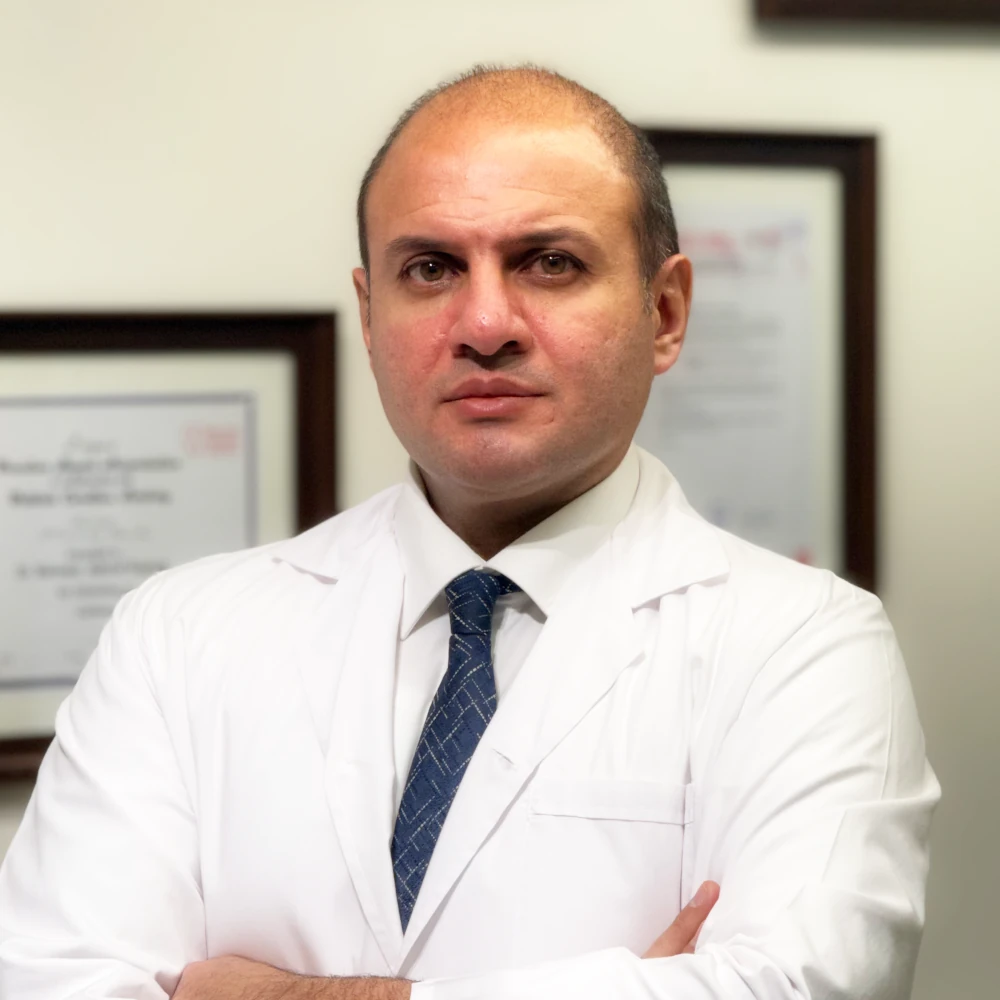
Dr. Behnam Vaghefi holds a fellowship in cardiology and vascular diseases, is a specialist in varicose vein treatment, and is a member of the American and European Heart Associations. This article has been written with the review and approval of Dr. Vaghefi, who is the author of several articles and books on cardiology and vascular diseases, and who has years of experience treating patients in his specialized clinic.
Medical Consultation
Comments
قبل از درمان خیلی درد داشتم الان درمان شدم درد پام کاملا برطرف شد و خیلی راضی ام از کاری ک انجام دادم ممنونم از آقای دکتر
ممنون از کادر درمان خیلی راضی بودم
با سلام باتشکرفراوان از اقای دکتر واقفی عزیز و پرسنل درمان مرکز بابت درمان واریس طنابی که داشتم و العان خدا رو شکر کلیه علائم واریس بر طرف شده و خیلی راضی هستم
من خیلی راضی بودم دستتون درد نکنه اقای دکتر
خوب و مفید بود.
من از اسکلروتراپی خیلی راضی بودم همیشه تو مخم بود ممنون از آقا دکتر