Varicose veins in women: Causes + Symptoms and Treatment
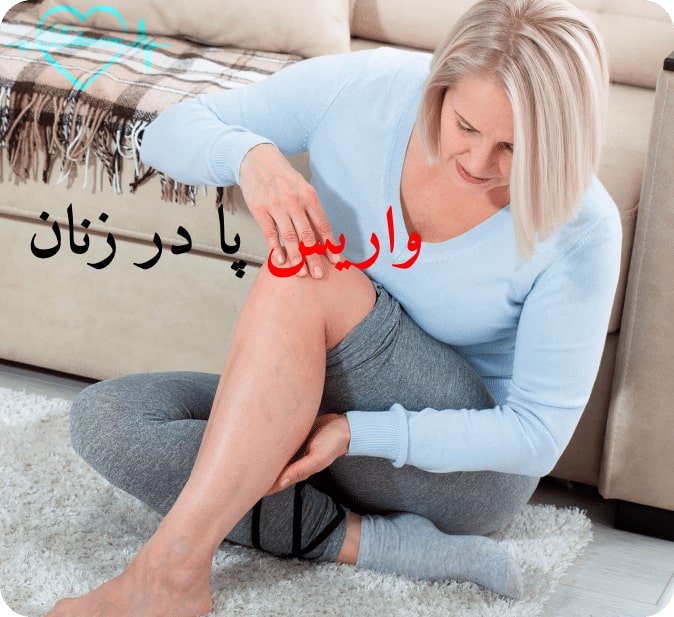
Women are twice as likely as men to develop varicose veins due to reasons such as pregnancy, hormonal changes and so on. The age at which women are most affected by varicose veins in the legs is usually between 40 and 50 years and about 75 percent of women over the age of 70 suffer from this condition.





Women are twice as likely as men to develop varicose veins due to reasons such as pregnancy, hormonal changes and so on. The age at which women are most affected by varicose veins in the legs is usually between 40 and 50 years and about 75 percent of women over the age of 70 suffer from this condition.
Women are twice as likely as men to develop varicose veins due to reasons such as pregnancy, hormonal changes and others. Although some studies have not confirmed higher incidence rates in women compared to men, women are still at greater risk due to the factors we will mention below.
The age at which women most commonly develop leg varicose veins is usually between 40 and 50 years and about 75 percent of women over 70 years old suffer from this disease. Unfortunately some sources believe that the probability of varicose veins in women is twice as high.
10 to 20 percent of women in their first pregnancy usually show mild symptoms of leg varicose veins and 40 percent of women who become pregnant multiple times experience this disease. Given the statistics we presented it can be understood that women are at greater risk and therefore prevention, recognition and treatment of leg varicose veins seem essential.
Many people think that leg varicose veins is more of a female disease but this idea is completely wrong and if you want to get information about the causes and symptoms of varicose veins in men too we suggest you read the article Varicose Veins in Men.
Causes of Leg Varicose Veins in Women
Some important causes and factors of varicose veins are common in both men and women but given the factors that play a more important role only in women and which we will name after these factors they should receive more attention in women:
Genetics
One of the important risk factors for varicose veins is genetics. If your parents or siblings in the family have varicose veins there is a high probability that you will also develop this disease.
Obesity and overweight
The higher the weight the greater the pressure on leg veins and this will set the stage for varicose veins.
Age
The elasticity and reversibility of veins and vessels decrease with age and therefore elderly people will be more prone to leg varicose veins.
Trauma or damage to veins
Damage caused by a blow or surgery to veins may cause varicose veins.
Underlying diseases
Some diseases such as kidney or liver failure, blood clotting disorders, diabetes and venous diseases can be contributing and predisposing factors in creating varicose veins in women.
Prolonged standing or sitting
Having jobs or activities that require prolonged standing or sitting during the day such as hairdressing, nursing and others put a lot of pressure on leg vessels and due to the disruption in the process of returning blood flow from legs to the heart, venous inflammation and blood accumulation occur.
Apart from the factors we mentioned some factors play a more important role specifically in women in creating varicose veins:
Hormonal changes
Women are more susceptible to this disease due to changes in their hormone levels during menstruation, pregnancy and menopause. Hormone fluctuations during menstruation and pregnancy as well as decreased estrogen levels during menopause reduce vein elasticity and efficiency and therefore increase the probability of varicose veins.
Pregnancy
Increased blood volume and uterine pressure on the pelvis and leg vessels during pregnancy put many women at risk of pregnancy varicose veins.
Anatomy and body structure
The structure of the female pelvis puts more pressure on leg vessels. In addition women naturally have more superficial veins in their legs and all these factors make them more susceptible to this disease and vein inflammation.
Use of birth control pills
Taking certain birth control pills increases the probability of varicose veins.
Wearing tight clothes
Since women wear more tight clothes, pants and socks than men they prevent natural and proper blood circulation in veins which is one of the prerequisites for creating varicose veins.
Wearing high-heeled shoes
Wearing high-heeled shoes especially if it is a habit most of the time or accompanied by prolonged standing and walking may cause damage and pressure to leg veins and over time make them varicose. If you want to know which shoes are suitable for varicose veins the article Suitable and Special Shoes for Varicose Veins contains useful information in this regard.
Symptoms and Signs of Leg Varicose Veins in Women
Feeling tired and heavy in the legs
Feeling tired and heavy in the legs due to blood accumulation in veins is one of the symptoms of varicose veins that especially intensifies at night. In some women this feeling may exist during pregnancy and preventive measures and tips related to pregnancy varicose veins should be taken quickly.
Cramping and pain in leg muscles
The inflammation and swelling that occurs in veins sometimes appears as muscle cramps and dull or shooting pain in the leg.
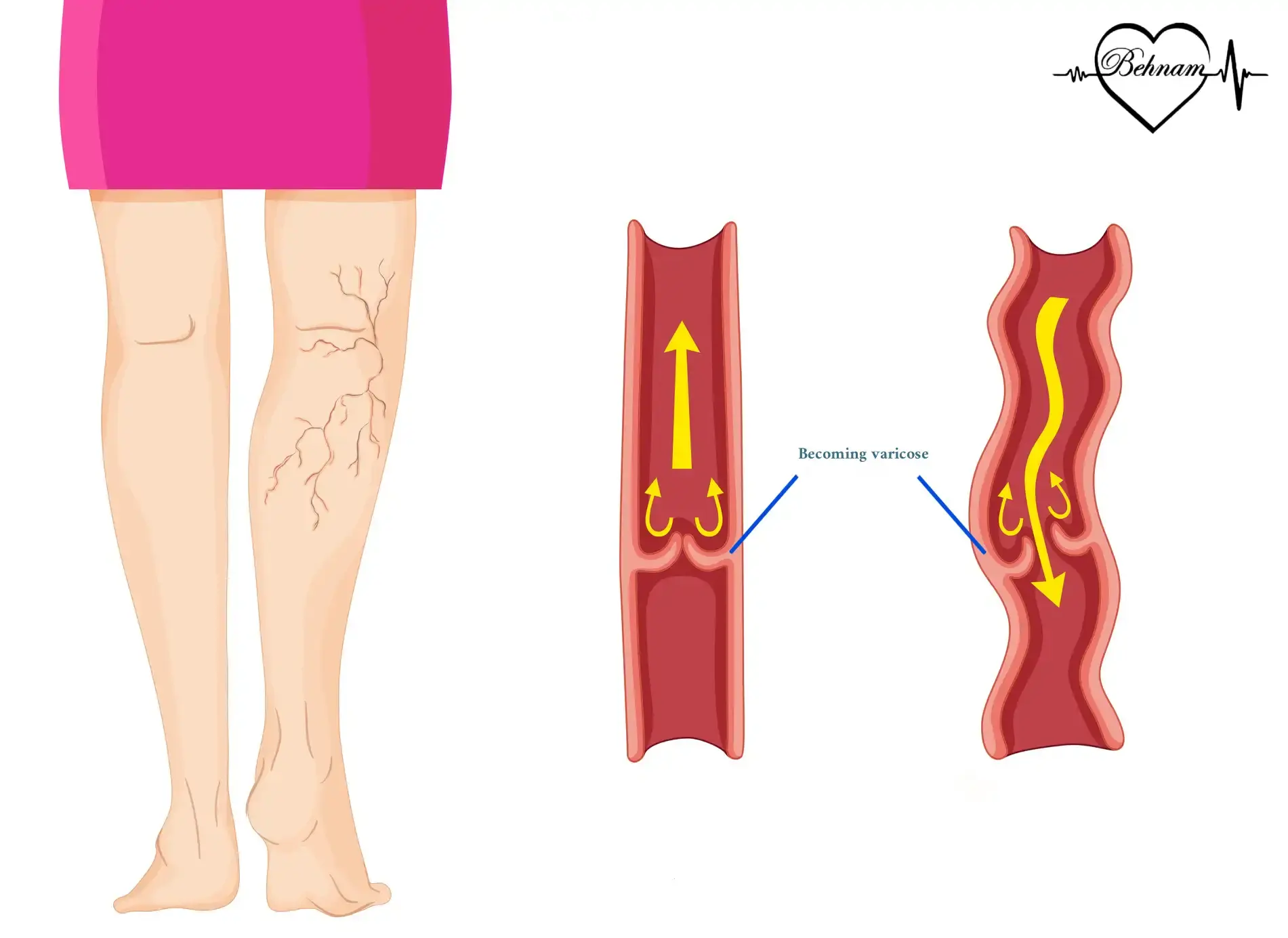
Twisted, swollen or blue and purple veins in the legs
Swelling, twisting and appearance of blue or purple veins under the skin are other symptoms of varicose veins that are created due to blood accumulation or clotting in veins.
Swelling in the calf and ankle
Swelling of the calf and ankle is one of the signs of leg varicose veins but it should not be confused with edema disease.
Itching, dryness and skin discoloration
Feeling itching, skin drying and discoloration indicate that blood accumulation and clotting have occurred in veins and natural blood supply and circulation have been disrupted. These symptoms are especially seen in women with deep or chronic varicose veins.
Ulcer or infection
Varicose veins due to the accumulation and pressure that blood puts on vein walls are also accompanied by bleeding and ulcer symptoms. These ulcers do not heal and therefore there is also a risk of infection.
Since varicose veins in addition to the health problems it creates can also create problems in the appearance and beauty of legs, its treatment is given higher priority for women.
Treatment of Leg Varicose Veins in Women
Before treatment, prevention of varicose veins is the first and best step before you get this disease.
Today there are various treatment methods for leg varicose veins, many of which are painless and bloodless. After diagnosing varicose veins the specialist doctor will choose the best and most suitable treatment according to the type and severity of the disease and the patient's general condition.
Treatment methods can be varied and include lifestyle changes, using varicose veins stockings, medication or one of the following methods:
Lifestyle changes
Regular exercise, proper diet, using suitable shoes and clothes, raising legs above heart level several times during the day, weight control and avoiding prolonged standing or sitting are among the things that help improve the symptoms of this disease.
Sclerotherapy
One of the effective methods in treating varicose veins that blocks and eliminates them by injecting a substance into varicose veins.
Laser
In this treatment, varicose veins are burned using laser beams or radio waves.
Phlebectomy
In this method varicose veins are removed from the leg through a very small surgery.
Surgery
Surgery and removal of varicose veins is a traditional method that has been used from the past until today and nowadays has less application than other methods.
Reading the article Definitive Methods of Treating Leg Varicose Veins can provide more information about each of these methods.
Conclusion
Although varicose veins in men is also common due to reasons such as obesity, genetics, age, type of job or inactivity, women are at greater risk due to reasons such as hormonal changes, pregnancy, menopause, body anatomy and lifestyle. Therefore it is necessary for them to take prevention and treatment of varicose veins seriously and pay special attention to this issue.
Certainly examination by a doctor and consultation with an experienced specialist in the field of varicose veins is our first suggestion to you.
FAQ
1- Why are women more prone to varicose veins than men?
Estrogen and progesterone hormones that play an important role in women's menstruation and fertility affect veins and also the muscles that control blood movement in your veins and consequently the probability of them becoming varicose.
2- Can high estrogen cause varicose veins?
Increased estrogen levels especially during pregnancy cause vessel dilation and increased blood flow and as a result create varicose veins.
3- At what age do varicose veins occur in women?
Varicose veins in women usually occur after the age of 50 due to weakening of vein walls and valves but it can also happen at younger ages.
Dr. Behnam Vaghefi holds a fellowship in cardiology and vascular diseases, is a specialist in varicose vein treatment, and is a member of the American and European Heart Associations. This article has been written with the review and approval of Dr. Vaghefi, who is the author of several articles and books on cardiology and vascular diseases, and who has years of experience treating patients in his specialized clinic.
Medical Consultation